-
Turkey Road

The New Waterford to Tramore Road was laid between 1832 and 1837, yet the section that now constitutes Turkey Road was not separately identified on the early 1840s Ordnance Survey map. This omission can be attributed to the absence of structures along its length, save for those situated at the intersections with Strand Street. Notably, Continue reading
-
The Haunted Well & Other Ghost Stories

There are several ghost stories associated with Tramore, the most famous of which is the spectre known as ‘The Guramooghagh,’ a mysterious figure who is believed to haunt the Rabbit Burrows. Other captivating stories include the Ghost Band of the Sea Horse, a spectral ensemble said to play a haunting melody on stormy nights, and Continue reading
-
The Metal Man Towers
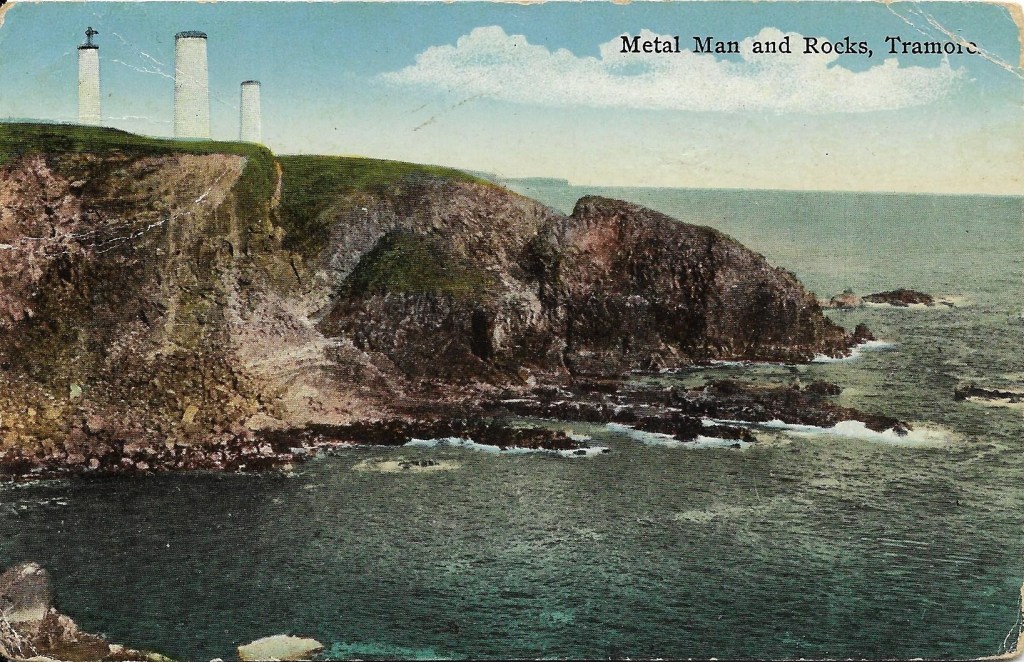
Since 1824, the towering cliffs at the entrance to Tramore Bay have been overseen by five imposing beacon towers—three situated on Great Newtown Head and two identical ones on Brownstown Head, standing tall against the backdrop of the rugged coastline. Perched on the central tower of the former is the iron statue of a sailor Continue reading
-
Shipwrecks in Tramore and its Environs: part II, 1800-1820

The following is a list of shipwrecks and close calls in and around Tramore Bay in the first two decades of the Nineteenth Century. It can be hard to comprehend just how common shipwrecks were in this period. It has been estimated that some 2000 wrecks occurred world wide every year between 1793-1815. While, Sir Continue reading
-
Shipwrecks in Tramore Bay and its Environs: Part I, The Eighteenth Century.
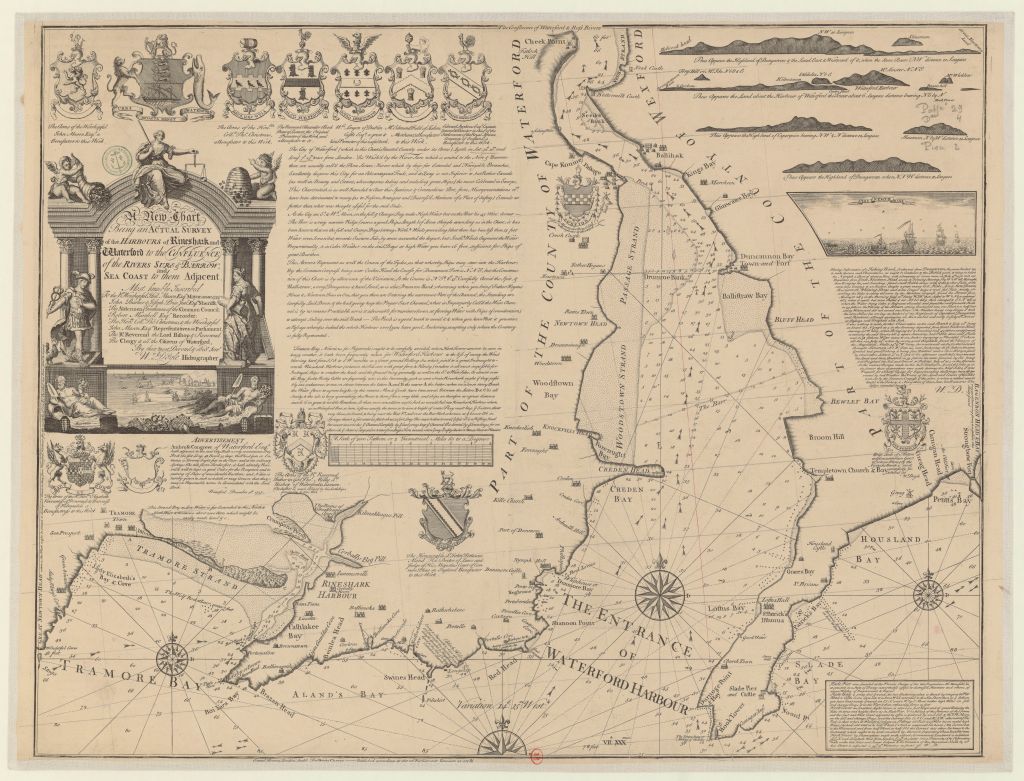
For centuries, Tramore Bay in County Waterford has held an infamous reputation as a graveyard of ships. The most famous of the wrecks being that of the Sea Horse transport, which driven into the bay and shipwrecked in a storm, over two hundred years ago, on 30 January 1816. This article chronicles the reports of Continue reading
-
History of the Waterford-Tramore Roads

In the early 18th century, most roads in Ireland were little more than trackways carved by the movement of carts and wagons over the centuries. There’s an old story that was first published in A Guide to Tramore in 1854 concerning the old rutty and stony road that led from Waterford to Tramore in the Continue reading
-
Mary Coghlan: A Resilient Tramore Business Woman

On 1 May 1790, an advertisement was placed in the local newspaper by Mary Coghlan nee Kenney, a determined entrepreneur, informing the public that she had taken out a lease on the Tramore Hotel, with plans for its grand opening on 1 June of that year. This is the first advertisement for an Irish seaside Continue reading
-
The Last Voyage of the Sea Horse: Tramore’s most Infamous Shipwreck

Ramsgate on the morning of the 25 January 1816, would have presented a bustling scene as the troops of the 59th and 62nd regiments, marched down the Military Road to the harbour to embark on their vessels for their journey to Cork. The majority of the 59th boarded the Sea Horse, Master James Gibbs, a Continue reading
-
The Growth of Tramore in the 18th Century
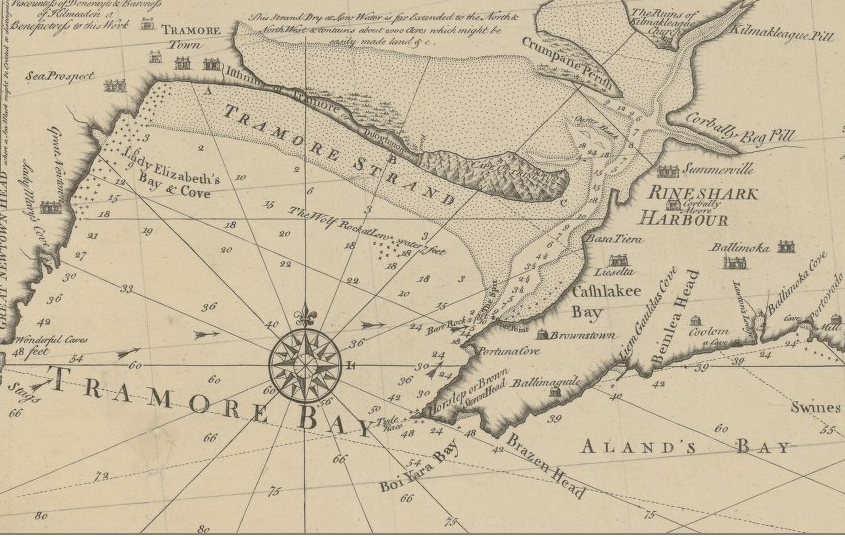
In 1738, William Doyle surveyed the coast of east Waterford and published a chart based on his findings. Doyle noted that Tramore Bay was notorious for shipwrecks and ought to be carefully avoided. Tramore is marked as ‘Tramore Town’ on the chart and two significant houses appear in close proximity to the strand, another where Continue reading
-
The Turbulent History of Tramore in the 17th Century

Ireland in the seventeenth century has been aptly described as ‘a land of blood and ashes.’[1] It was the time when the last bastions of the old Gaelic order were finally swept away by rebellion and conquest. At the beginning of the century all the townlands in the area around Tramore were owned by branches Continue reading

 Tramore of Yore